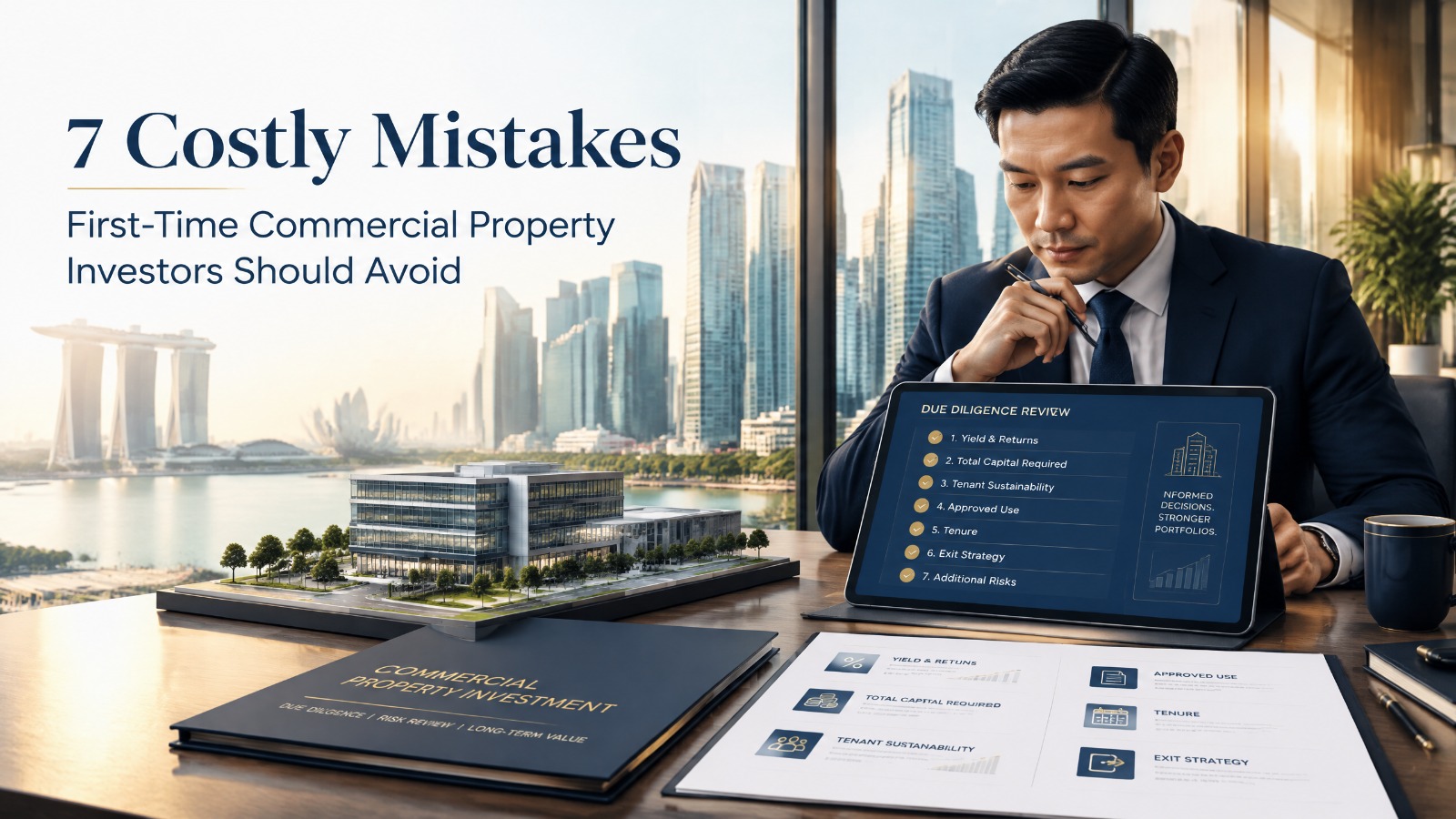
1. Buying Because the Yield Looks Attractive
A high rental yield naturally gets attention.
But a higher yield does not automatically mean a better investment.
Before getting excited about a 5% or 6% yield, ask:
Why is the yield this high?
It could be because the property is genuinely attractively priced.
But it could also reflect factors such as a weaker location, shorter tenancy, unusual rental arrangements or a smaller pool of future buyers.
Yield should be a starting point for investigation, not the final reason to buy.
2. Looking Only at Gross Yield
Gross yield is useful, but it doesn't tell you what you will actually keep.
A simple gross yield calculation does not necessarily account for costs such as property expenses, vacancy periods, financing costs, taxes or the transaction costs involved in buying the property.
For example, two properties can both show a 4% gross yield but have very different underlying characteristics.
One may have a strong tenant, a long lease and good future demand.
The other may have a lease expiring soon and require significant work to secure the next tenant.
The same yield does not necessarily mean the same investment.
3. Forgetting the Total Capital Required
One of the easiest mistakes is to think:
"The property costs $3 million, so I need $3 million."
The actual capital required can be higher once you consider items such as Buyer's Stamp Duty, GST where applicable, legal fees, financing costs and renovation or fit-out requirements.
Financing also needs to be considered carefully.
Before committing to a property, understand how much cash you need upfront and whether the financing structure is comfortable for you.
A property can be affordable on paper but uncomfortable from a cash-flow perspective.
4. Assuming the Current Tenant Will Stay Forever
A property with a good tenant can be attractive.
But the tenant's current lease has an expiry date.
Before buying, I want to understand:
- How long remains on the lease?
- Is the current rental sustainable?
- Is it close to market rent?
- What is the tenant's business situation?
- How difficult would it be to find a replacement tenant?
The question isn't simply:
"Is this a good tenant?"
It is:
"What happens to my investment if this tenant leaves?"
A strong investment should ideally have a reasonable leasing story beyond the current tenancy.
5. Ignoring Approved Use and Property Restrictions
A property can look perfect for a particular business but still not be suitable for the buyer's intended use.
Depending on the property, you may need to consider approved use, planning requirements, change of use, building restrictions and other regulatory or management requirements.
This is especially important when looking at F&B, retail and industrial properties.
Before committing to a purchase, make sure the property can support the intended use.
Don't assume that because another business is operating there today, your intended use will automatically be approved.
6. Assuming Freehold Automatically Means Better
Freehold is attractive.
But it doesn't automatically make a property a better investment.
A freehold property may command a higher purchase price because buyers value the longer tenure. If the rental income does not increase proportionately, the resulting rental yield may actually be lower.
A leasehold property may sometimes provide a higher yield because of a lower acquisition price.
So instead of asking:
"Is it freehold?"
I would ask:
"What am I paying for the tenure, and does the investment still make sense at that price?"
Tenure is important, but it should be considered together with price, rental income, location, demand and exit potential.
7. Buying Without Thinking About the Exit
Many first-time investors spend a lot of time asking:
"How much rent will I receive?"
But not enough time asking:
"Who will buy this property from me?"
Commercial property is a long-term decision.
Eventually, you may want to sell.
The future buyer could be an investor looking for rental income, an owner-occupier looking for a business premises, another investor attracted by the location or someone looking at the property's longer-term potential.
If the property only appeals to a very narrow group of buyers, your exit may be more difficult.
Before buying, understand not only why you want the property, but why someone else might want it from you later.
The Lightbulb
A Good Commercial Property Is More Than a Good Deal Today
This is where I think many first-time investors get caught.
They see:
Good location + existing tenant + attractive yield = good investment.
But commercial property is rarely that simple.
A better way to think about it is:
Price + income + tenant + tenure + location + risk + exit
You are not simply buying a property.
You are buying an income stream, a set of risks and a future resale proposition.
That's why I don't believe the best property is necessarily the cheapest one or the one with the highest yield.
The better question is:
"Does this property still make sense when I look beyond today's numbers?"
That shift in thinking can prevent a costly mistake.
The Bottom Line
Your first commercial property purchase should not be driven by excitement.
It should be driven by understanding.
Before committing, make sure you know:
- What you are really paying
- What the property is realistically earning
- How sustainable the rental income is
- What happens when the current lease ends
- Whether the property suits the intended use
- What you are paying for the tenure
- Who your future buyer could be
You don't need to predict everything perfectly.
But you should know what you are buying and what could go wrong before you commit your capital.
If you're considering a commercial property and want another perspective before making a decision, feel free to reach out.
Call or WhatsApp Patrik @ 9328 9376This article is for general information only and should not be taken as financial, legal or tax advice. Buyers should obtain independent professional advice where appropriate.
What's Next?
Knowing what mistakes to avoid is important. But there is another question investors often overlook: who is actually paying your rental income?
In the next article, I'll look at how to evaluate a commercial property tenant before you buy — because the tenant behind the rental income can tell you a lot more about an investment than just the company name.
Working through a similar brief?
Send the details — you'll get a real reply, not a templated one.
Send an enquiry