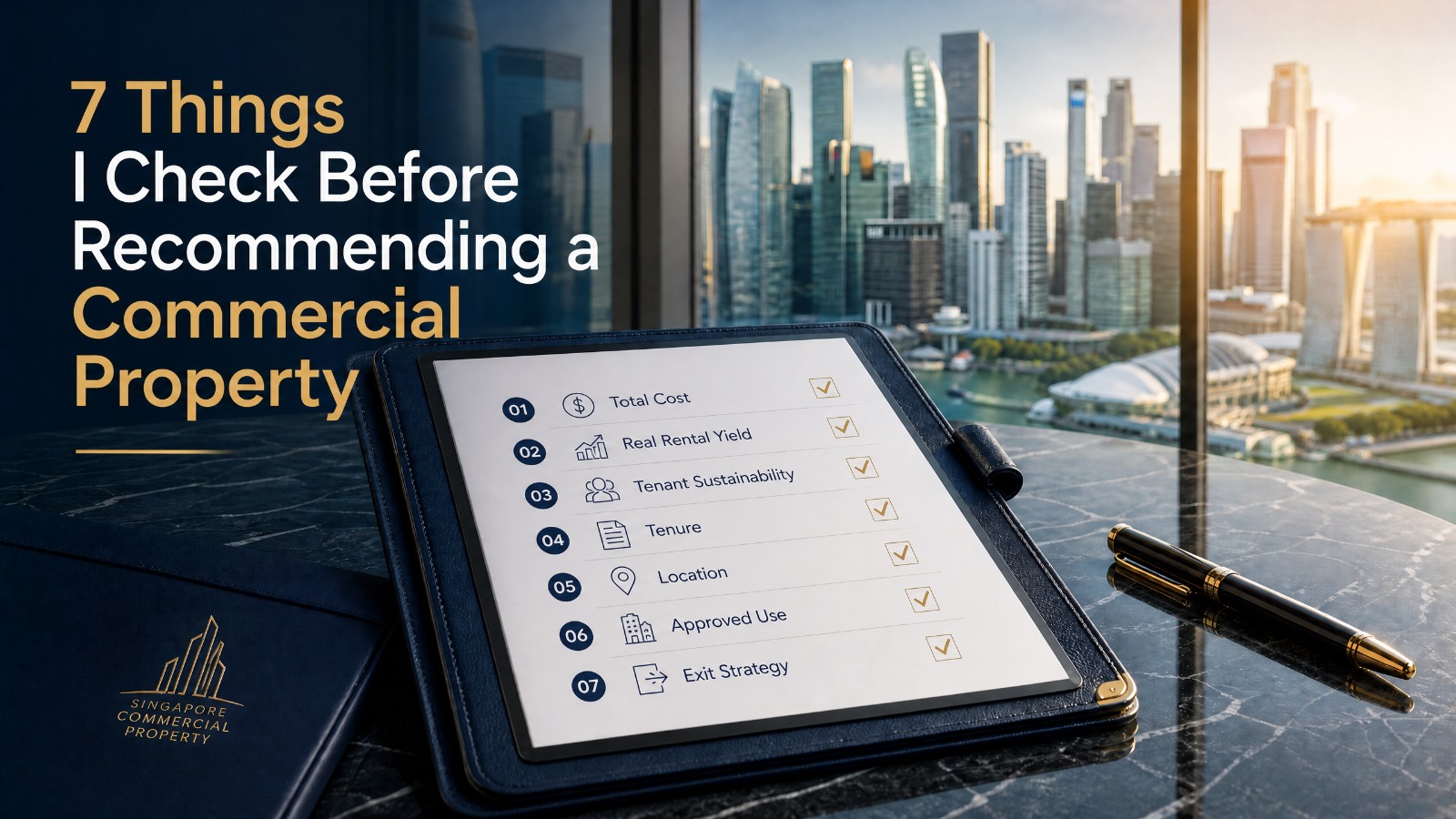
1. Total Cost of Buying
The asking price is only the starting point.
Before looking at whether a property is affordable, I consider the total capital required to complete the purchase.
This can include:
- Purchase price
- Buyer's Stamp Duty
- GST where applicable
- Legal fees
- Financing costs
- Renovation or fit-out costs
- Other transaction expenses
For example, a property advertised at $3 million may not mean the buyer only needs to think about $3 million.
The actual amount of capital required can be significantly higher depending on the transaction and how the purchase is financed.
This is why I prefer to understand a buyer's available capital and objectives before recommending properties based purely on price.
2. The Real Rental Yield
Rental yield is one of the first numbers investors look at.
But it should not be the last.
A property advertised at a 5% gross yield may immediately attract attention. I would then want to understand how that 5% was achieved.
Is the current rental at market level?
How long does the tenancy have left?
Is the rental supported by a strong tenant?
What happens when the lease expires?
Are there expenses that will reduce the actual return?
A simple gross yield calculation can tell you what the property is earning relative to its purchase price, but it does not tell you the whole investment story.
The more important question is:
Why is this property offering this yield?
Sometimes the answer is a genuine pricing opportunity.
Sometimes it reflects additional risk.
3. The Tenant and Rental Sustainability
The tenant is an important part of a commercial property investment.
A property with a good tenant and a secure lease can provide income visibility. But I don't just look at the tenant's name.
I want to understand:
- What business does the tenant operate?
- How long have they been there?
- How long remains on the lease?
- Is the current rental sustainable?
- How does the rent compare with the market?
- What is the likely demand if the tenant leaves?
This last question is particularly important.
A property may be generating attractive rental income today, but what happens if the tenant does not renew?
The quality of the next tenant can be just as important as the quality of the current tenant.
4. Tenure and Remaining Lease
Freehold is often perceived as automatically being better.
I don't think it is that simple.
Freehold properties can command a premium because buyers value the longer tenure. But paying a higher price for freehold does not automatically mean you will receive a higher rental yield.
Conversely, a leasehold property may sometimes offer a more attractive yield because the purchase price is lower while rental demand remains relatively strong.
For leasehold properties, I look at the remaining lease, location, tenant demand, pricing and potential resale market.
The important point is that tenure should be considered together with the price you are paying and the income you are receiving.
Freehold or leasehold is not the investment decision by itself.
5. Location and Property Fundamentals
"Prime location" sounds attractive, but I want to know what actually makes the particular property attractive.
Two commercial units in the same building can have very different investment characteristics.
I look at factors such as:
- MRT and transport accessibility
- Foot traffic
- Visibility
- Surrounding businesses
- Catchment population
- Parking and accessibility
- Floor level
- Unit position
- Building accessibility
- Suitability for different businesses
For example, a retail unit located directly beside a major entrance may have very different leasing prospects from another unit hidden on a less accessible floor.
The building location matters, but the unit's location within the building can matter too.
6. Approved Use and Property Suitability
This is an area that buyers sometimes overlook when they become excited about a property.
A unit may appear perfect for a particular business, but that does not necessarily mean the intended use is automatically permitted.
Depending on the property, buyers may need to consider:
- Approved use
- Planning requirements
- Change of use
- Building restrictions
- Landlord or management restrictions
- Requirements specific to certain business activities
This can be particularly important for retail, F&B and industrial properties, where the intended use can significantly affect the property's suitability.
Before committing to a purchase, I would recommend checking the relevant requirements and obtaining professional advice where necessary.
A property is only useful as an investment if it can actually support the demand you are buying it for.
7. The Exit Strategy
Finally, I ask a question that is often forgotten when investors are focused on buying:
Who is going to buy this property from you in the future?
Commercial property is not just about the rental income you receive while you own it.
At some point, you may want to sell.
So I consider:
- Who the likely future buyers are
- Whether the unit is easy to lease
- The potential tenant pool
- Remaining lease and tenure
- Location and accessibility
- Competing properties
- Future demand
- Potential resale liquidity
A property that looks attractive to you today may not necessarily be attractive to the next buyer.
That's why I believe an exit strategy should be considered before you buy, not only when you decide to sell.
The Lightbulb
The Highest Yield Is Not Always the Best Investment
This is probably the most important lesson I would want an investor to take away from these seven checks.
It is easy to compare two commercial properties and immediately choose the one offering the higher yield.
But yield is only telling you what the property is earning relative to the price you are paying.
It doesn't tell you everything about the risk behind that income.
A higher yield could come from a lower purchase price. But it could also be associated with a shorter lease, weaker tenant demand, an unusual rental situation, a less desirable location or a smaller future buyer pool.
So instead of asking only:
"What is the yield?"
I believe investors should also ask:
"Why is the yield this high?"
That one question can lead you to a much deeper assessment of the investment.
The Bottom Line
There is no single number that can tell you whether a commercial property is a good investment.
Price matters. Yield matters. The tenant matters. Tenure matters. Location matters. But the real investment decision comes from understanding how all these factors work together.
Before recommending a commercial property, I want to understand:
What are you paying?
What are you earning?
How sustainable is that income?
What risks are you taking?
And who might buy the property from you in the future?
The goal isn't necessarily to find the property with the highest advertised yield.
The goal is to find a property that makes sense for your capital, objectives, risk profile and longer-term strategy.
What Should You Do Next?
If you are currently looking at a commercial property, don't just send me the asking price and rental.
Send me the property details or listing, and we can look at the opportunity from these different angles.
If you're not sure what type of commercial property you should be looking for, you can also share your budget, preferred location, intended use and investment objectives.
I'll help you narrow down what makes sense for your requirements.
Call or WhatsApp Patrik @ 9328 9376What's Next?
Buying a commercial property is one thing. Knowing which mistakes to avoid before you buy is another.
In the next article, I'll look at 7 Costly Mistakes First-Time Commercial Property Investors Make — including some mistakes that can turn an attractive-looking property into a much less attractive investment.
Continue to Article 7 → (coming next)
Working through a similar brief?
Send the details — you'll get a real reply, not a templated one.
Send an enquiry